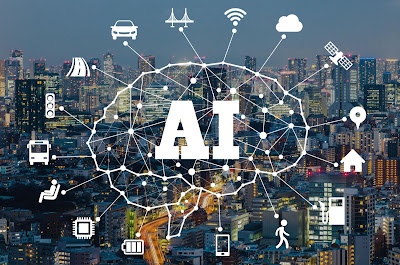
What is Artificial Intelligence (AI)?

In the current digital era, artificial intelligence (AI) is one of the most significant and rapidly developing technologies. It is changing how people live, work, interact, and resolve issues. Smartphones, social media, online commerce, healthcare, finance, transportation, education, and entertainment are just a few of the industries that now use AI. Despite AI’s widespread use, many people still don’t fully comprehend what it is or how it operates.
To put it simply, artificial intelligence (AI) is a technology that enables computers and machines to think, learn, and make decisions in a manner that is comparable to that of humans. It enables systems to perform tasks that normally require human intelligence. Language comprehension, image recognition, problem solving, data analysis, and experience-based learning are some of these activities. Artificial Intelligence (AI) does not imply that machines have human-like emotions or consciousness; rather, it refers to their ability to mimic intelligent behavior.
Large volumes of data, sophisticated algorithms, and processing power are all necessary for AI to function. In order to forecast or make judgments, these systems examine patterns in data. When you browse social media or watch movies on YouTube, for instance, AI analyzes your behavior and recommends content based on your interests. Over time, AI grows more precise and effective as it processes more data. “Machine learning,” a key component of AI, refers to this capacity for self-improvement.
Understanding language is one of its primary skills. Through chatbots, voice assistants like Siri and Google Assistant, and translation tools, AI is able to read, comprehend, and react to human language. This greatly facilitates human-machine communication.
The ability to recognize objects and images is another crucial skill. AI is able to recognize faces, objects, and scenes in pictures and movies. Security systems, social media tagging, and even medical diagnosis—where AI examines X-rays and scans—all employ this technology.
AI is also highly good at making decisions and solving problems. In many scenarios, it can assess complicated issues and find solutions more quickly than people. AI, for instance, aids businesses in comprehending consumer behavior and improving data-driven decision-making.
AI’s ability to learn from experience is another helpful feature. By learning from fresh data, AI systems continuously enhance their performance. As a result, they get increasingly accurate and clever over time without requiring ongoing human programming.
Making recommendations is another common application of AI. AI is used by online services like Netflix, Amazon, and YouTube to recommend films, goods, and videos according to customer tastes. This makes it easier and faster for consumers to locate pertinent content.
AI is ubiquitous in everyday life. It powers social media feeds, voice assistants, online shopping recommendations, and navigation apps like Google Maps. AI in healthcare aids physicians with early disease detection and better treatment strategies. AI in education gives students individualized learning opportunities. AI is used in business to automate processes, evaluate data, and enhance customer support.
AI has benefits, but it also has drawbacks. Automation has the potential to displace some occupations, pose privacy issues, and, if improperly taught, occasionally produce biased or unfair findings. For this reason, using AI responsibly and ethically is crucial.
All things considered, artificial intelligence is a revolution that is reshaping the world and not merely a technology. It is improving efficiency, speed, and ease of living. AI will benefit industry, open up new opportunities, and change how people use technology as it develops. Because AI will have a significant impact on humanity’s future, it is crucial to comprehend it now.

Simple Examples of AI in Daily Life
Apps like Siri, Alexa, and Google Assistant use AI to understand your voice and answer questions.
2. YouTube and Netflix Recommendations
When platforms suggest videos or movies based on your interests, AI is working in the background.
3. Google Maps
AI helps find the fastest route, avoid traffic, and estimate travel time.
4. Face Unlock on Smartphones
Your phone uses AI to recognize your face and unlock the device.
5. Chatbots
How Does AI Work?
AI works by learning from data. It studies information, finds patterns, and improves over time. This process is often called Machine Learning.
Basic Process of AI:
Collect data
Analyze patterns
Learn from examples
Make predictions or decisions
Improve with more data
For example, if an AI system is shown thousands of cat and dog images, it can learn to identify the difference between them.
Main Types of AI
.jpg)
1. Narrow AI
Google Translate
Siri
Recommendation systems
2. General AI
3. Super AI
Benefits of AI
Disadvantages of AI
Where is AI Used Today?
Healthcare
Disease detection
Medical image analysis
Virtual health assistants
Education
Personalized learning apps
AI tutors
Automatic grading systems
Finance
Fraud detection
Smart banking apps
Investment analysis
E-commerce
Product recommendations
Customer support bots
Price optimization
Transportation
Self-driving cars
Navigation systems
Traffic prediction
How to Start Learning AI as a Beginner
Why is AI Important for the Future?
AI is considered one of the most important technologies of the future. Many companies are already using AI to grow faster and reduce costs.
Freelancing
Online earning
Software development
Data science
Digital marketing
Automation business
Is AI Dangerous?
AI itself is not dangerous. It depends on how people use it. When used responsibly, AI can improve life, save time, and solve big problems.
However, misuse of AI can create issues like fake content, privacy risks, and unfair decisions.
Final Thoughts
Artificial Intelligence is the science of making machines smart. It helps computers learn, think, and solve problems like humans.
AI is already part of our daily life, and its role will continue to grow in the future. If you are a beginner, now is a great time to start learning AI.
Frequently Asked Questions (FAQs)
AI stands for Artificial Intelligence.
Is AI hard to learn?
No. Beginners can start with basic concepts and simple tools.
Do I need coding to learn AI?
Coding helps, especially Python, but some beginner tools need no coding.
Can AI help make money online?
Yes. AI can be used in freelancing, content creation, automation, and business.
Will AI replace humans?
AI may replace some tasks, but it will also create new jobs and opportunities.