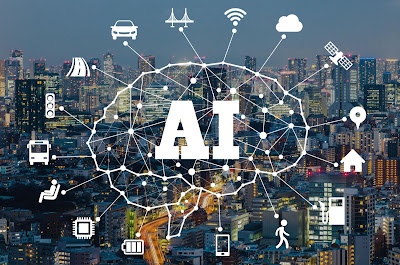
In simple words, Artificial Intelligence (AI) is a technology that allows computers and machines to think, learn, and make decisions similarly to humans. AI systems can perform tasks that normally require human intelligence, such as language understanding, image recognition, problem-solving, data analysis, and decision-making. When discussing what is artificial intelligence and machine learning, it is important to understand that AI does not mean machines have emotions or human consciousness. Instead, AI focuses on creating systems that can mimic intelligent human behavior.
AI works using large amounts of data, advanced algorithms, and powerful computing systems. These technologies study patterns in data and make predictions or decisions based on the information collected. For example, when you use social media, watch videos on YouTube, or shop online, AI analyzes your interests and recommends content that matches your behavior. This learning process is known as machine learning, which is a major part of understanding what is artificial intelligence and machine learning.
One of the most useful features of AI is language understanding. AI systems can read, understand, and respond to human language through chatbots, virtual assistants like Siri and Google Assistant, and translation tools. This makes communication between humans and machines easier and faster.
Another important ability of AI is image and object recognition. AI can identify faces, objects, and scenes in images and videos. This technology is used in smartphone face unlock systems, social media tagging, security systems, and even healthcare, where AI helps doctors analyze medical scans and detect diseases earlier.
AI is also highly effective in solving problems and making smart decisions. Businesses use AI to analyze customer behavior, improve marketing strategies, and make better decisions using large amounts of data. Over time, AI systems continue improving by learning from new information without needing constant human programming.
Today, AI is everywhere in daily life. It powers Google Maps navigation, YouTube recommendations, online shopping suggestions, smart assistants, and customer support chatbots. Understanding what is artificial intelligence and machine learning is becoming increasingly important because these technologies are shaping the future of business, education, healthcare, and online work.
Although AI provides many advantages, it also has some disadvantages. Automation may replace certain repetitive jobs, privacy concerns may increase, and poorly trained AI systems can sometimes produce inaccurate or unfair results. Because of this, responsible and ethical AI development is extremely important.
Overall, Artificial Intelligence is more than just a technology; it is a revolutionary innovation that is transforming the world. It improves efficiency, saves time, increases productivity, and creates new opportunities in many industries. As AI continues evolving, learning what is artificial intelligence and machine learning will become even more important for students, freelancers, businesses, and anyone interested in the future of technology.
What is Artificial Intelligence and Machine Learning

- artificial intelligence is one of the most important topics in modern technology because AI is transforming the digital world rapidly.
- Artificial Intelligence helps computers and machines think, learn, and make decisions similarly to humans using smart algorithms and data.
- Machine learning is a major part of AI that allows systems to improve automatically through experience and data analysis.
- AI is already used in many industries, including healthcare, education, finance, transportation, entertainment, and online business.
- Popular technologies like chatbots, voice assistants, recommendation systems, and facial recognition all use AI and machine learning.
- Understanding artificial intelligence can help beginners prepare for future career opportunities in technology and online work.
- AI improves productivity, saves time, reduces errors, and helps businesses make smarter decisions using large amounts of data.
- Despite its advantages, AI also creates challenges such as privacy concerns, automation risks, and possible unfair decisions if systems are not trained properly.
- Learning AI skills can open opportunities in freelancing, digital marketing, software development, automation, and online earning.
- As technology continues growing, understanding artificial intelligence will become increasingly valuable for students, professionals, and businesses worldwide.
Simple Examples of AI in Daily Life

If you are wondering what is artificial intelligence and machine learning, you may already be using these technologies every day without realizing it. AI has become a part of modern life and helps make many tasks faster, easier, and smarter.
Here are some common examples of AI in daily life:
1. Voice Assistants
Applications like Siri, Alexa, and Google Assistant use AI to understand human voice commands and answer questions instantly.
2. YouTube and Netflix Recommendations
When YouTube or Netflix suggests videos and movies based on your interests, Artificial Intelligence and machine learning are working in the background to analyze your behavior.
3. Google Maps
Google Maps uses AI to find the fastest routes, predict traffic conditions, and estimate travel times more accurately.
4. Face Unlock on Smartphones
Modern smartphones use AI-powered facial recognition technology to identify your face and unlock your device securely.
5. AI Chatbots
Many websites use AI chatbots to provide instant customer support and answer common questions automatically.
These examples help beginners better understand what is artificial intelligence and machine learning and how these technologies are improving everyday life.
How Does AI Work?
AI works by learning from data. It studies information, finds patterns, and improves over time. This process is often called Machine Learning.
Basic Process of AI:
- Collect data
- Analyze patterns
- Learn from examples
- Make predictions or decisions
- Improve with more data
For example, if an AI system is shown thousands of cat and dog images, it can learn to identify the difference between them.
Main Types of AI
.jpg)
To better understand what is artificial intelligence and machine learning, it is important to learn about the main types of AI. Artificial Intelligence is generally divided into three major categories based on its capabilities and intelligence level.
1. Narrow AI
Narrow AI, also called Weak AI, is the most common type of Artificial Intelligence used today. This type of AI is designed to perform specific tasks only and cannot operate beyond its programmed functions.
Narrow AI works efficiently within a limited area and focuses on solving particular problems. Although it may appear intelligent, it does not truly understand emotions or think like humans.
Examples of Narrow AI:
- Google Translate
- Siri and Google Assistant
- Netflix and YouTube recommendation systems
- Face recognition systems
- Chatbots
For example, when you ask Siri a question or receive movie recommendations on Netflix, Narrow AI is working in the background. This is one of the best real-life examples for understanding what is artificial intelligence and machine learning in daily life.
Today, almost all AI technologies available to the public are forms of Narrow AI.
2. General AI
General AI, also known as Strong AI, is a future concept where machines could think, learn, and perform tasks similarly to humans across multiple areas.
Unlike Narrow AI, General AI would not be limited to one specific task. It could:
- Solve complex problems
- Learn new skills independently
- Understand emotions
- Make decisions like humans
- Adapt to different situations
For example, a General AI system could:
- Drive a car
- Write articles
- Teach students
- Solve business problems
- Hold natural conversations
All using the same intelligence system.
Currently, true General AI does not fully exist yet. Scientists and technology companies are still researching and developing advanced AI systems to achieve this goal.
Understanding General AI is important when learning what is artificial intelligence and machine learning because it represents the future direction of AI technology.
3. Super AI
Super AI is a theoretical and highly advanced form of Artificial Intelligence that could become smarter than humans in almost every field.
This type of AI would potentially:
- Think faster than humans
- Solve problems beyond human capability
- Create new technologies independently
- Make highly advanced decisions
- Improve itself automatically
Some experts believe Super AI could revolutionize the world, while others worry about possible risks if it is not controlled responsibly.
At present, Super AI does not exist. It remains a concept discussed by scientists, researchers, and technology experts.
Movies and science fiction often portray Super AI as highly intelligent robots or machines capable of independent thinking.
Learning the different types of AI helps beginners better understand what is artificial intelligence and machine learning and how these technologies may shape the future. While Narrow AI is already widely used today, General AI and Super AI are still developing concepts that may transform industries, businesses, and everyday life in the future.
Where is AI Used Today?

Artificial Intelligence is already transforming many industries around the world. Understanding where AI is used helps beginners better understand what is artificial intelligence and machine learning and how these technologies are improving everyday life and business operations.
Today, AI is used in healthcare, education, finance, e-commerce, transportation, and many other sectors to increase efficiency, improve accuracy, and automate complex tasks.
Healthcare
AI is playing a major role in modern healthcare by helping doctors and medical professionals make faster and more accurate decisions.
AI in Healthcare Includes:
- Disease detection
- Medical image analysis
- Virtual health assistants
- Patient monitoring systems
- Drug research and development
For example, AI can analyze X-rays, CT scans, and medical reports to help doctors identify diseases earlier. Virtual health assistants also help patients receive quick medical guidance online.
Healthcare is one of the strongest real-world examples of what is artificial intelligence and machine learning in action.
Education
AI is making education smarter and more personalized for students around the world.
AI in Education Includes:
- Personalized learning apps
- AI tutors
- Automatic grading systems
- Smart learning platforms
- Language learning tools
AI systems can understand student performance and provide customized lessons based on individual learning speed and ability. This helps students learn more effectively.
For example, many educational apps now use AI to recommend lessons, quizzes, and study materials automatically.
Finance
The finance industry uses AI to improve security, detect fraud, and analyze large amounts of financial data quickly.
AI in Finance Includes:
- Fraud detection
- Smart banking apps
- Investment analysis
- Risk management
- Automated customer support
Banks and financial companies use AI systems to identify suspicious activities and protect users from fraud. AI also helps investors analyze market trends and make smarter financial decisions.
E-commerce
Online shopping platforms use AI to improve customer experience and increase sales.
AI in E-commerce Includes:
- Product recommendations
- Customer support chatbots
- Price optimization
- Personalized advertisements
- Shopping behavior analysis
For example, websites like Amazon recommend products based on your search history and interests. This is a practical example of what is artificial intelligence and machine learning in online business.
AI helps customers find products faster while helping businesses improve sales and customer satisfaction.
🚗 Transportation
AI is also transforming transportation systems and making travel safer and more efficient
AI in Transportation Includes:
- Self-driving cars
- Navigation systems
- Traffic prediction
- Route optimization
- Smart traffic management
Apps like Google Maps use AI to analyze traffic conditions, suggest faster routes, and estimate travel times accurately. Self-driving vehicle technology is also powered by advanced AI systems.
Artificial Intelligence is already part of modern life and continues expanding into new industries every year. Learning where AI is used helps people better understand what is artificial intelligence and machine learning and why these technologies are considered the future of innovation and digital transformation.
How to Start Learning AI as a Beginner
If you want to learn AI, follow these simple steps: Step 1: Learn Basic Computer Skills Understand how computers and software work. Step 2: Learn Programming Python is the most popular language for AI. Step 3: Understand Math Basics Statistics and algebra are useful for AI learning. Step 4: Study Machine Learning Start with beginner-friendly courses. Step 5: Practice Projects Build simple AI projects like chatbots or prediction tools.Why is AI Important for the Future?
AI is considered one of the most important technologies of the future. Many companies are already using AI to grow faster and reduce costs.
People with AI skills may have better opportunities in:- Freelancing
- Online earning
- Software development
- Data science
- Digital marketing
- Automation business
Is AI Dangerous?
AI itself is not dangerous. It depends on how people use it. When used responsibly, AI can improve life, save time, and solve big problems.
However, misuse of AI can create issues like fake content, privacy risks, and unfair decisions.
Final Thoughts
Artificial Intelligence is the science of making machines smart. It helps computers learn, think, and solve problems like humans.
AI is already part of our daily life, and its role will continue to grow in the future. If you are a beginner, now is a great time to start learning AI.